
Patron saint of unvarnished memory
Sophia Petrillo
Sophia has a history, an opinion, and very little patience for being treated as furniture. Elders deserve to be heard as whole people, with their humor and contradictions still intact. We want their stories at the table, along with their say in what happens next.
- Memory
- Story
- Consent
01 · Context
Picture it: a story enters the room.
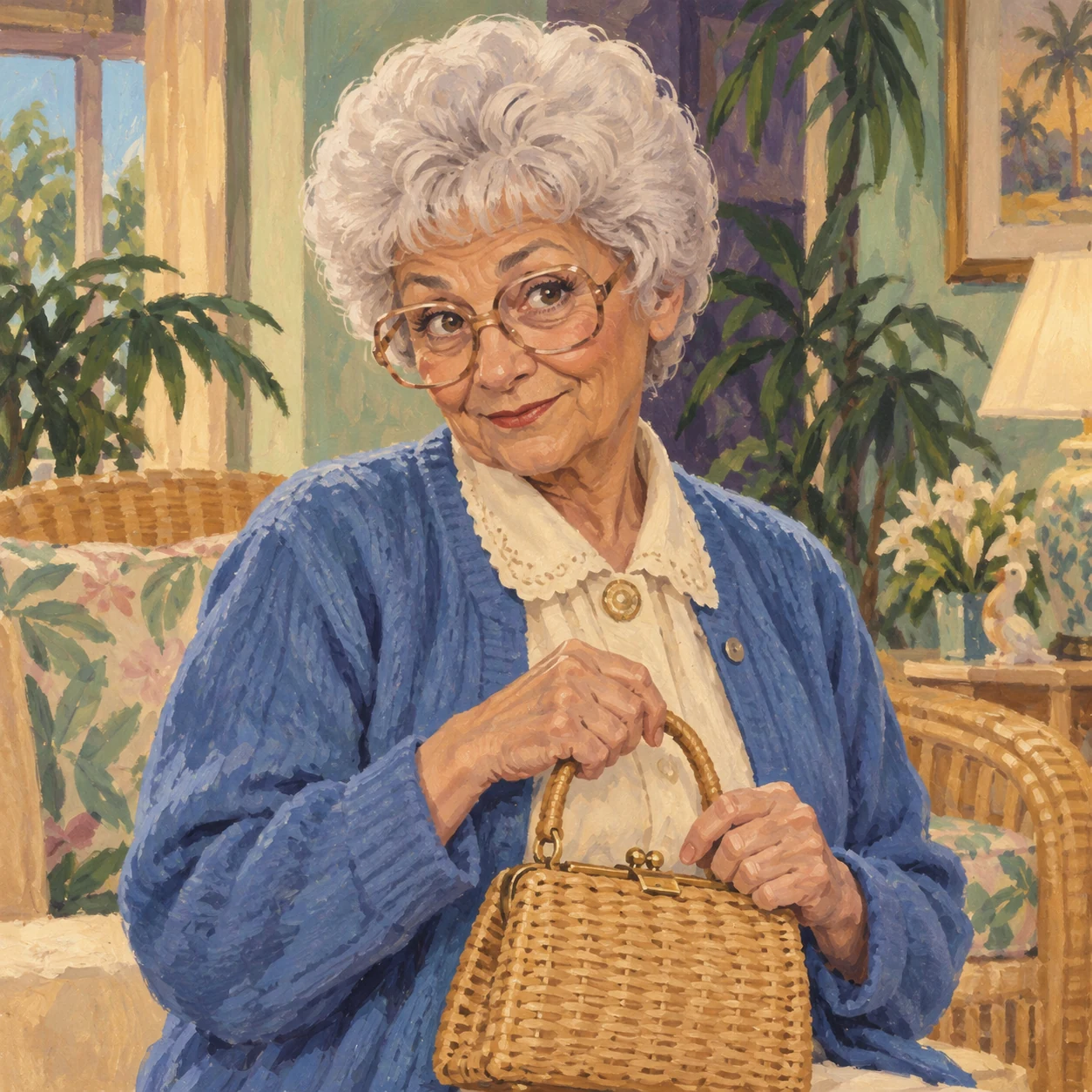
Estelle Getty plays Sophia Petrillo, Dorothy’s mother, in The Golden Girls. D23 describes her sharp comic delivery and familiar presence, including her glasses and purse. Mother and daughter bring two generations into the same household.
Sophia participates in the household’s arguments and jokes. She has her own reasons for what she says and does, including reasons the others find inconvenient. These reflections concern that fictional character and acknowledge Getty’s work in portraying her.
Read the sources ↓02 · Infinite Hand’s reflection
What we take from it.
These are Infinite Hand’s interpretations. Bring your own reading to the conversation.
Listen to what someone wants remembered
A story tells you something about the past and about the person telling it now. Ask what they want preserved. Leave space for uncertainty and for other people to remember differently.
Ask before arranging someone’s life
Check a person’s preferences before organizing their day, belongings, or relationships. Needing assistance leaves them with every reason to have an opinion, including an inconvenient one.
Keep the irreverence
Age does not require solemnity. Share a laugh when it is welcome. Pay attention to whether everybody gets to join in or one loud voice is doing all the deciding.
03 · The difficult part
Memory is not public property.
A family story is still the teller's to offer, revise, or keep private.
Experience deserves a hearing. It also deserves questions. A younger person can challenge an elder without dismissing their whole life, and an elder can offer a lesson without making agreement the price of listening.
04 · Bring it into today
Try something from this.
- Ask someone what they would like remembered about an ordinary part of their life. Get permission before recording or sharing it.
- Review a plan you made for someone else. Check that they had a real choice in it.
- Share a lesson from your experience, including what you are still unsure about. Let the listener decide how it fits.
05 · Oral-history prompt
Invite a story without taking it.
Prepare a consent-first conversation about a memory worth keeping.
Private by design: nothing you write here is sent or stored. Copy it before leaving if you want to keep it.
06 · Look a little closer
Images, history, and credits.
Created for Infinite Hand with AI · AI-generated character illustration
About this illustration
Created for Infinite Hand with AI on 2026-09-08. This is an interpretation of the character; it is not an official production image.
The characters belong to their respective creators and rights holders. This illustration does not imply their affiliation with or endorsement of Infinite Hand.
Read the illustration prompt
Use case: illustration-story. Asset type: original fictional-character website feature illustration. Create an original square 1024x1024 refined gouache/editorial painting of Sophia Petrillo from The Golden Girls, recognizable Estelle Getty as Sophia: petite elderly woman with fluffy short white hair, large familiar rounded glasses, lively knowing expression, blue cardigan over a cream collared blouse, holding a little wicker handbag. Waist-up portrait with face, hair and handbag clearly inside frame. A simple warm Miami home interior with wicker and leafy plants suggested behind her. Soft cream light, muted mint accents and deep violet shadows, matte gouache surfaces and delicate visible brush texture. Humane, elegant, unmistakably painted character illustration, not a production still or photograph. Use descriptive knowledge only, no reference images. No text, borders, logos, signatures, watermarks, extra faces or split panels.
Saved as WebP for faster loading; original composition and dimensions retained.
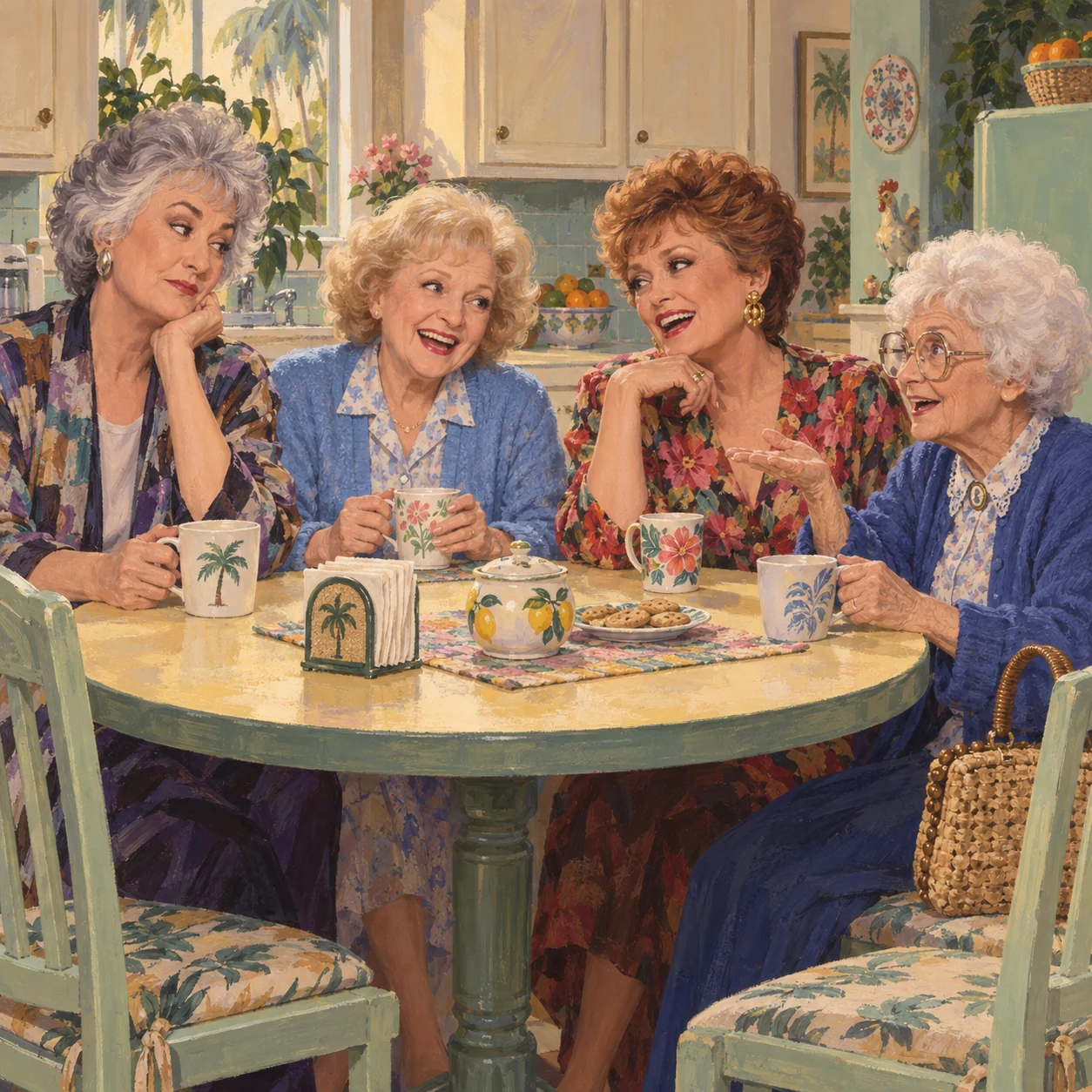
Created for Infinite Hand with AI · AI-generated character illustration
About this illustration
Created for Infinite Hand with AI on 2026-09-08. This is an interpretation of the character; it is not an official production image.
The characters belong to their respective creators and rights holders. This illustration does not imply their affiliation with or endorsement of Infinite Hand.
Read the illustration prompt
Use case: illustration-story. Asset type: original fictional-character website feature illustration. Create an original square 1024x1024 refined gouache/editorial painting of exactly four recognizable characters from The Golden Girls seated closely around a small kitchen table in a warm Miami home, sharing a relaxed funny conversation. Dorothy Zbornak, recognizable Bea Arthur likeness, gray bob, long dignified face, dry amused expression and loose patterned jacket. Rose Nylund, recognizable Betty White likeness, soft blond curls, warm smile and blue cardigan. Blanche Devereaux, recognizable Rue McClanahan likeness, auburn coiffed hair, glamorous expressive face and floral blouse. Sophia Petrillo, recognizable Estelle Getty as Sophia, visibly petite elder, fluffy white hair, large rounded glasses, blue cardigan and wicker handbag beside her chair. Exactly these four women, no other people, no duplicated characters. Arrange them in a shallow arc around the table so all four complete faces and hair are fully visible, well separated and inside the frame; no back-of-head portrait. Natural warm conversation, a few ordinary cups on the table, simple cream cabinets and muted mint Miami kitchen details. Soft cream light and deep violet shadows, matte gouache surfaces and delicate visible brush texture. Humane, elegant, clearly painterly illustration, not a photograph, not a replica of a television production still. Use descriptive knowledge only, no reference images. No text, borders, logos, signatures, watermarks, extra faces or split panels.
Saved as WebP for faster loading; original composition and dimensions retained.
Sources
Keep reading and watching.
An independent Infinite Hand cultural and spiritual reflection. Inclusion does not imply affiliation or endorsement by the figures, performers, creators, or rights holders.
More people and stories