
A place for making, mending, and mourning.
Brigid
Poetry, healing, making things, and staying beside grief all have a place in this encounter with Brigid. Her histories ask for care too. The Irish goddess, the Christian saint, and later artists’ imaginings are related subjects whose connections deserve study without pretending every uncertainty is settled.
- Making
- Healing
- Grief
01 · Context
Poetry, forge, healing, and a history with open questions.
Medieval Irish texts associate the goddess Brigit with poetry, metalworking, and healing. University College Cork’s Department of Early and Medieval Irish notes how little survives about her compared with the traditions of Saint Brigid of Kildare. It also discusses evidence of connections with the saint and the British goddess Brigantia, while leaving historical questions open.
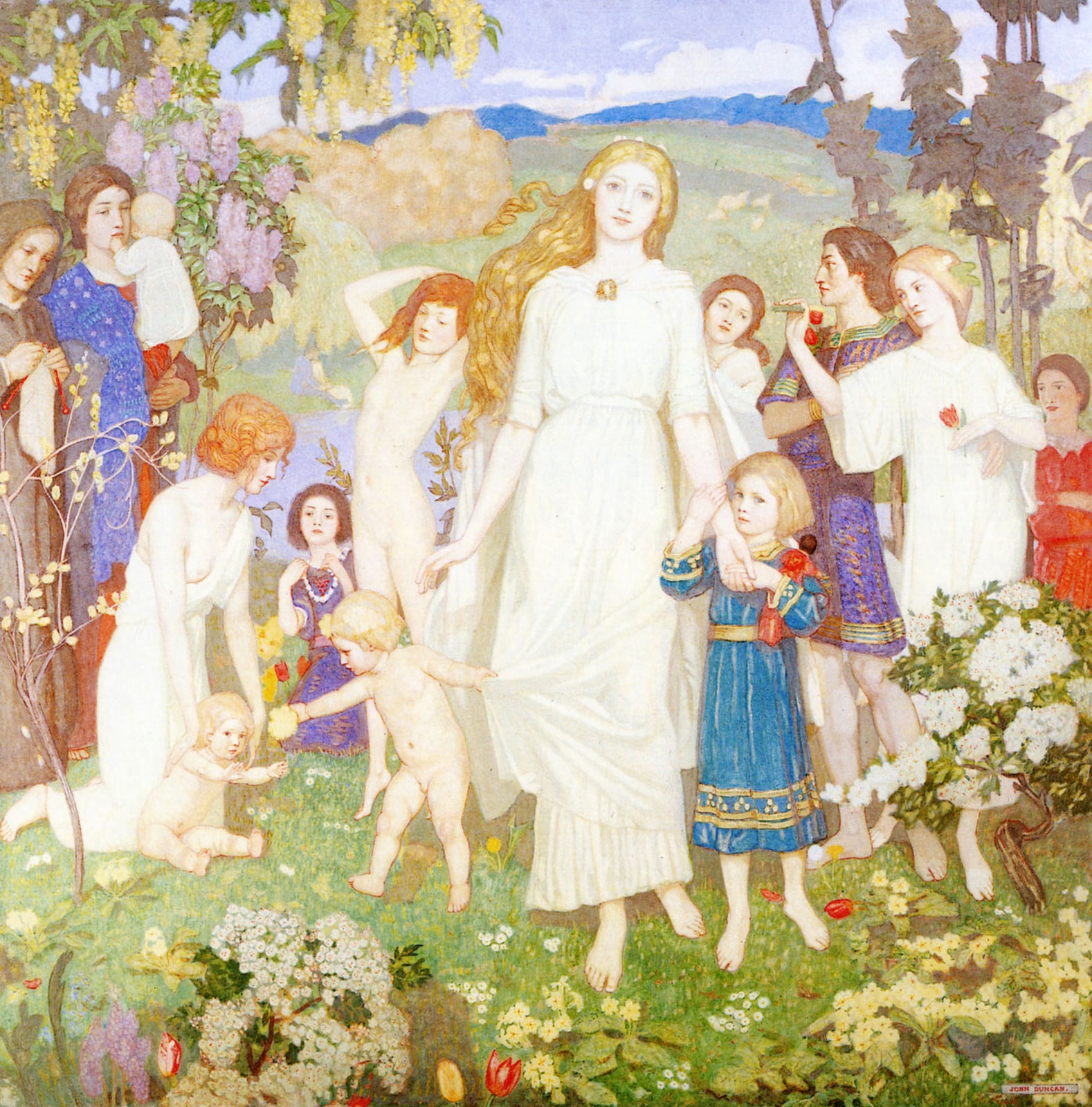
In Cath Maige Tuired, Bríg mourns her son Rúadán. The narrative links her lament to the beginning of keening in Ireland. Much later artists imagined Bride and Saint Brigid in their own ways: John Duncan’s 1917 painting belongs to the Celtic Revival, and Da Loria Norman’s watercolor explicitly portrays the Christian saint.
Read the sources ↓02 · Infinite Hand’s reflection
What we take from it.
These are Infinite Hand’s interpretations. Bring your own reading to the conversation.
Support the person making something
A repaired chair, a useful object, or words that help a neighbor speak take skill. Share materials, encouragement, and fair recognition. Give people time to practice and teach.
Stay with grief at its own pace
Offer company, a meal, or help with an ordinary task. Ask what is welcome. Remember the person after others assume the hard part has passed, and let them have their grief without producing a lesson from it.
Finish a repair together
Tend a shared space, return a tool, or mend a relationship where repair is wanted. Choose something within your ability and carry it through. Share the work so somebody else gets a chance to rest.
03 · The difficult part
Related traditions are not interchangeable.
Not every broken thing wants the same response: some need making, some mending, some mourning.
The relationship between the goddess and Saint Brigid remains debated. Calling the saint a disguised goddess would overstate the evidence, as would ruling out any connection. Modern devotion also deserves to be understood on its own terms. Our practices here are contemporary reflections, rather than a reconstruction of an unchanged ancient ritual.
04 · Bring it into today
Try something from this.
- Repair or make one useful thing. Acknowledge the skill and help that made it possible.
- Check in with someone after a loss. Leave them free to feel how they feel.
- Read a poem aloud, write a few honest lines, or make time for someone else’s story.
05 · Three-fire practice
Make. Mend. Mourn.
Choose the kind of attention this moment can honestly receive.
Private by design: nothing you write here is sent or stored. Copy it before leaving if you want to keep it.
06 · Look a little closer
Images, history, and credits.
John Duncan · Public domain (PD-Art; PD-old-80-expired)
View the collection record ↗
Resized for web display; full composition retained.
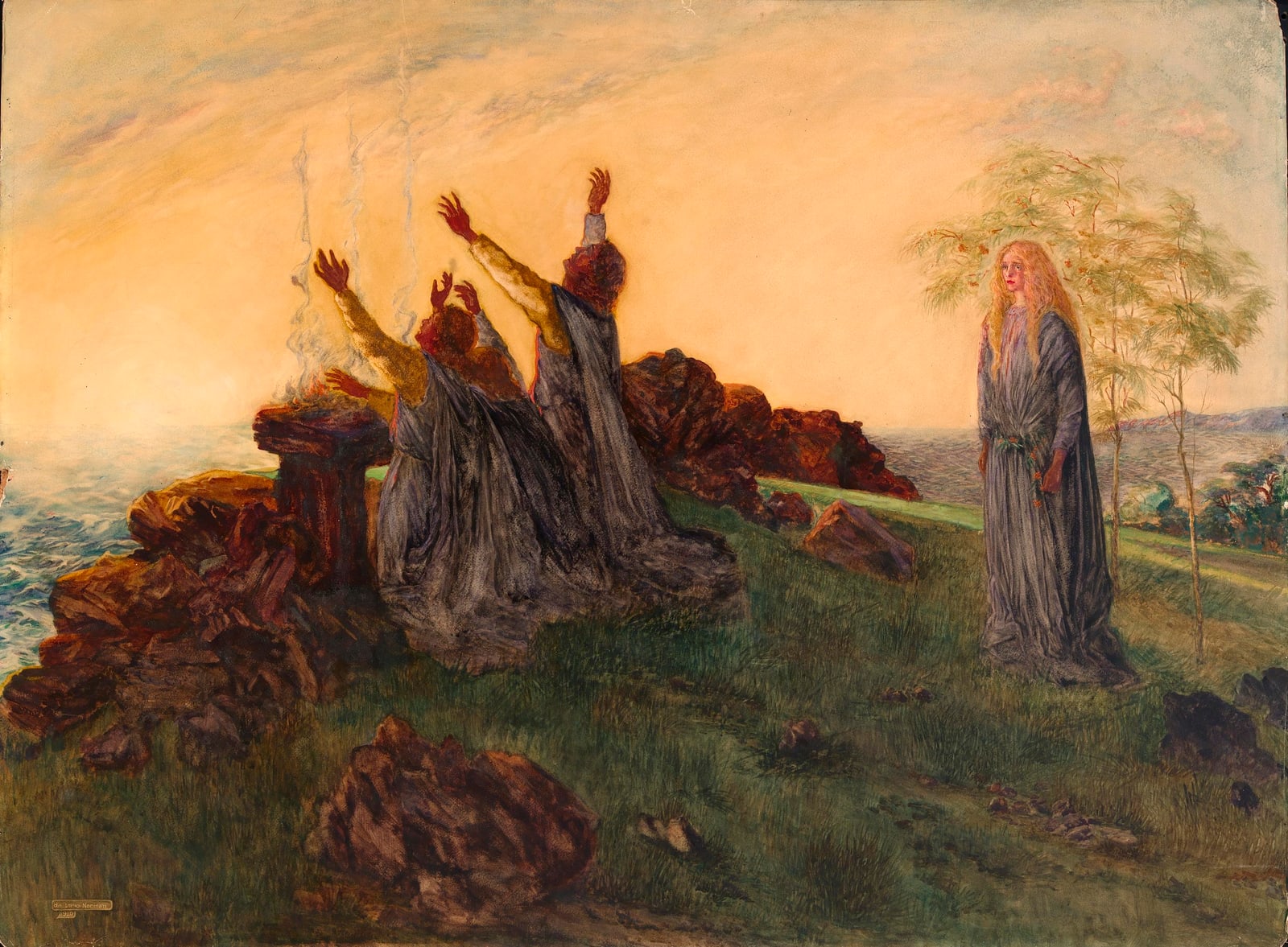
Da Loria Norman; Smithsonian American Art Museum · CC0 / public domain
View the collection record ↗Resized for web display; full composition retained.
Sources
Keep reading and watching.
- Brigit: Saint or Goddess? · University College Cork ↗
- Cath Maige Tuired, translated by Elizabeth A. Gray · CELT, University College Cork ↗
- The Coming of Bride, 1917: artwork and public-domain record · Wikimedia Commons ↗
- The Passing of St. Brighid · Smithsonian American Art Museum ↗
Tradition and story are presented in context. The reflections and practices express Infinite Hand’s interpretation.
More people and stories