
Learning that opens a door.
Saraswati
Saraswati brings learning, language, music, and art into Hindu devotional life. We meet her here with appreciation for the patience those practices take. Somebody has to share the tools, explain the first step, and make it comfortable for a beginner to ask again.
- Learning
- Art
- Humility
01 · Context
Learning, music, and living devotion.
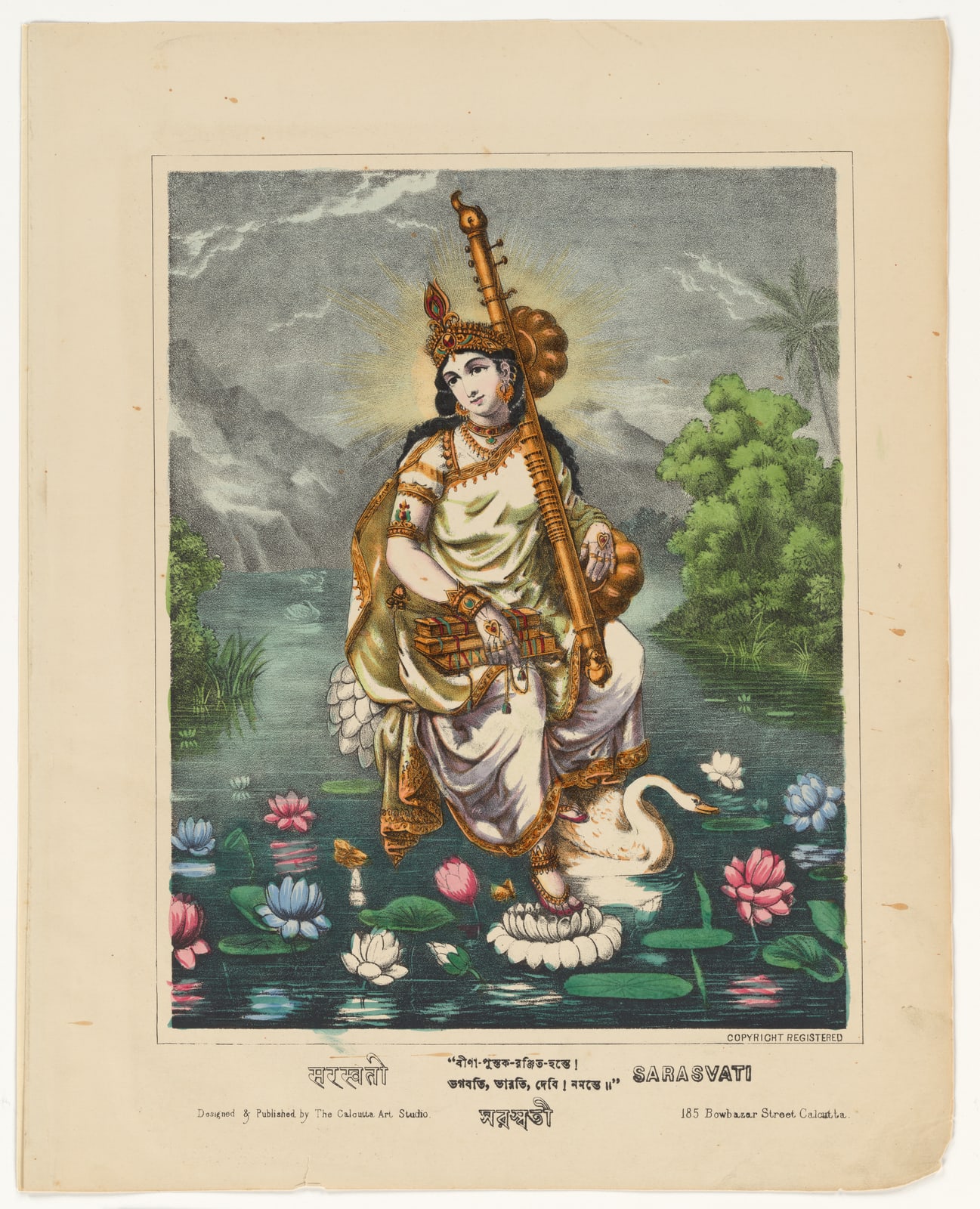
Hindu devotional accounts associate Saraswati with learning, wisdom, and artistic expression. The Hindu American Religious Institute explains her vina through creative arts, the palm-leaf book through study, and prayer beads through spiritual wisdom. Their meanings belong to particular religious contexts and can vary.
The Met’s Calcutta lithograph from 1878–1883 depicts Sarasvati with a white lotus, swan, instrument, and books. A second nineteenth-century print was made for a medical-store advertisement. It records a commercial use of devotional imagery; its presence here does not endorse the advertised products.
Read the sources ↓02 · Infinite Hand’s reflection
What we take from it.
These are Infinite Hand’s interpretations. Bring your own reading to the conversation.
Make the first question welcome
Explain the unfamiliar word. Give a beginner a clear first step and time to try it. Let them ask again without having to apologize.
Give creativity time and tools
Share materials, make room for practice, and offer useful feedback. People can participate while they are still learning. Let an unfinished attempt stay unfinished long enough to teach its maker something.
Help someone reach the knowledge
Cost, language, time, and difficult systems can keep useful information out of reach. Read a form together, explain a process, or introduce a teacher. Ask first and leave the person able to take the next step.
03 · The difficult part
Appreciation requires attribution and humility.
Learning begins by naming what you do not know and who is teaching you.
Expertise can become a status marker that shuts people out. Share what you know and credit where you learned it. Saraswati’s place in Hindu religion also deserves attention beyond what her image might inspire in our own teaching or creative work.
04 · Bring it into today
Try something from this.
- Explain a useful skill to a beginner. Ask which part needs another example.
- Spend a little time making music, drawing, writing, or practicing another art. Give the work time before judging it.
- Find a barrier to learning in your community and share a resource that helps someone past it.
05 · Learning pathway
Source. Practice. Share.
Plan a beginner's path that respects the people and tradition it comes from.
Private by design: nothing you write here is sent or stored. Copy it before leaving if you want to keep it.
06 · Look a little closer
Images, history, and credits.
Unknown artist, Calcutta, West Bengal; The Metropolitan Museum of Art · CC0 / public domain
View the collection record ↗Resized for web display; full composition retained.
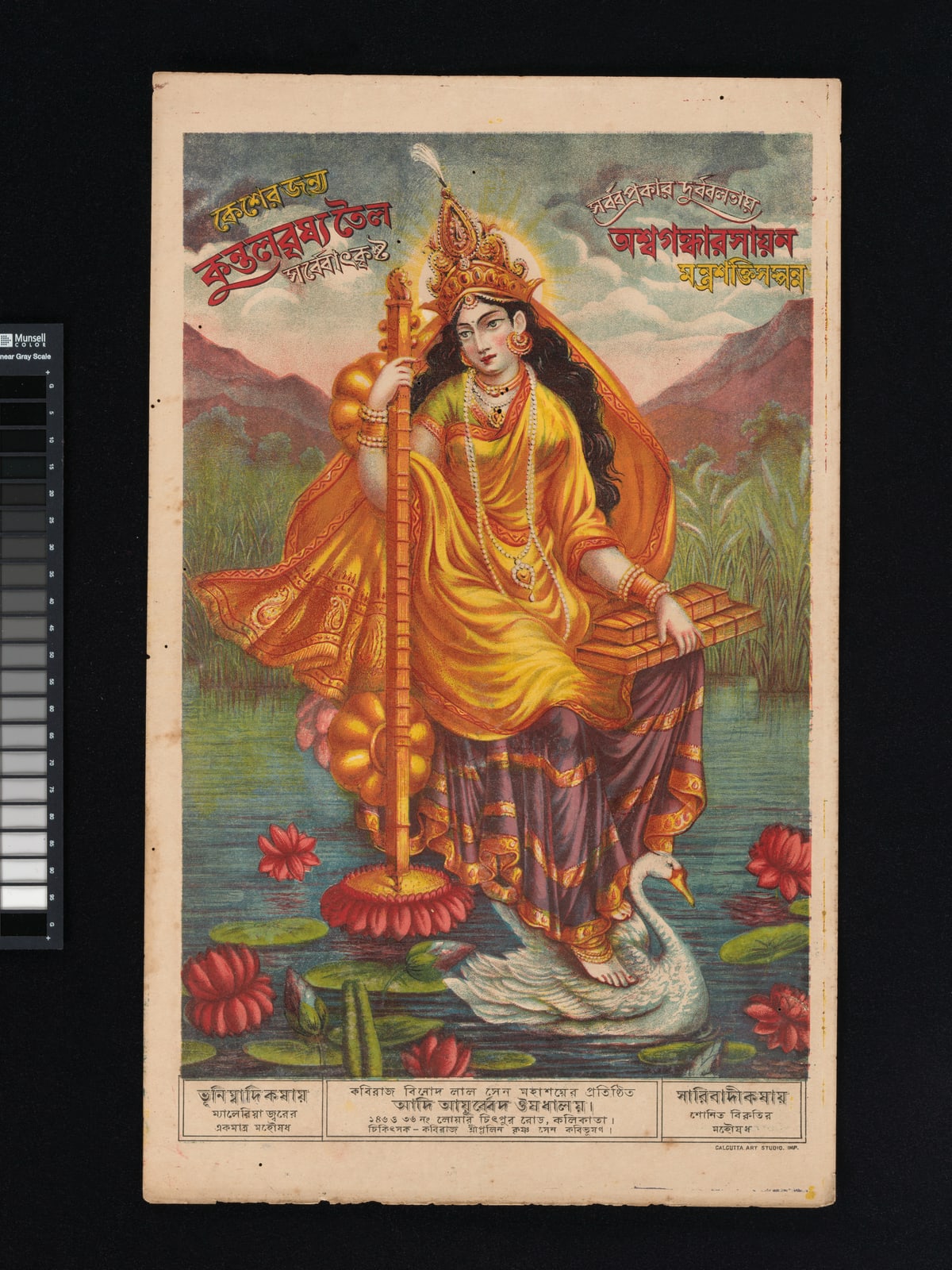
Unknown Indian printmaker; The Metropolitan Museum of Art · CC0 / public domain
View the collection record ↗Resized for web display; full composition retained.
Sources
Keep reading and watching.
- Saraswati and her attributes · Hindu American Religious Institute ↗
- Goddess Sarasvati, Calcutta, 1878–1883 · The Metropolitan Museum of Art ↗
- Sarasvati in nineteenth-century print culture · The Metropolitan Museum of Art ↗
Tradition and story are presented in context. The reflections and practices express Infinite Hand’s interpretation.
More people and stories