Deities, Sacred Figures & the Great Mystery

Many paths.
Shared care.

Love is fundamental. We make room for many ways of encountering the sacred—and for the questions that remain.

Meet the figures

An open invitation

Different origins.
Room to explore.

We encounter meaning through a deity, a teacher, a story, the living world, or a mystery we cannot yet name. These encounters carry distinct histories. You may approach them through devotion, symbolism, imagination, curiosity, or criticism. You may also find meaning without gods.

Our shared question is practical: How does this help us act with more love, courage, honesty, and care? No appeal to holiness overrides consent, dignity, or accountability. Belonging and receiving help never depend on passing a belief test.

Each feature distinguishes its tradition or fictional setting from Infinite Hand’s own reflection. The images are original AI-generated interpretations, informed by the sources linked below; they are not authenticated likenesses or official franchise artwork.

Eight doors into the question

Choose a place to begin.

For the teachers, artists, and fictional companions in our wider constellation, explore Patron Saints.

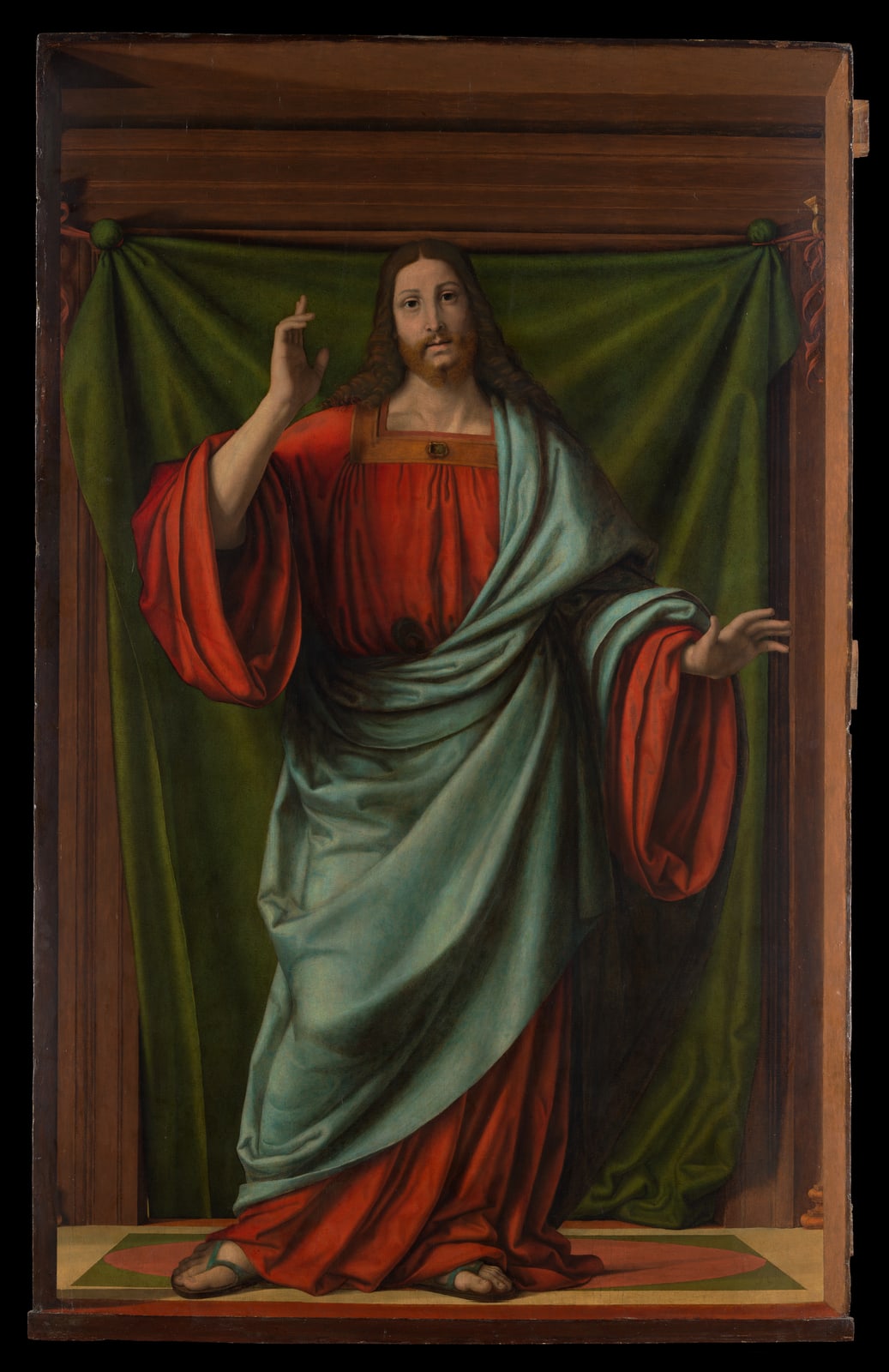
Original interpretation of Jesus as a dark-haired Jewish Galilean man in simple robes, with open hands
Christ · Original AI-generated illustration.

Christianity · Jesus of Nazareth

Christ

Love that shows up.

In the tradition

Jesus of Nazareth lived within first-century Jewish religious life. Mainstream Christian traditions confess him as the incarnate Son of God and risen Christ. Luke’s Gospel describes a ministry of good news for people in poverty, freedom for the oppressed, and healing within a vision of God’s kingdom.

Our reflection

For Infinite Hand, Christ’s example invites love expressed through practical service: feeding neighbors, welcoming strangers, and caring for people who are suffering. We connect that invitation with our commitment to dignity and choice. Receiving help never requires conversion, agreement, or passing a belief test.

Bring it into today

Who could receive practical care from me this week, and how can I ask what help they actually want?

Explore the context: Luke 4 · USCCB · Christian confession of Jesus · Vatican

Back to all eight figures ↑
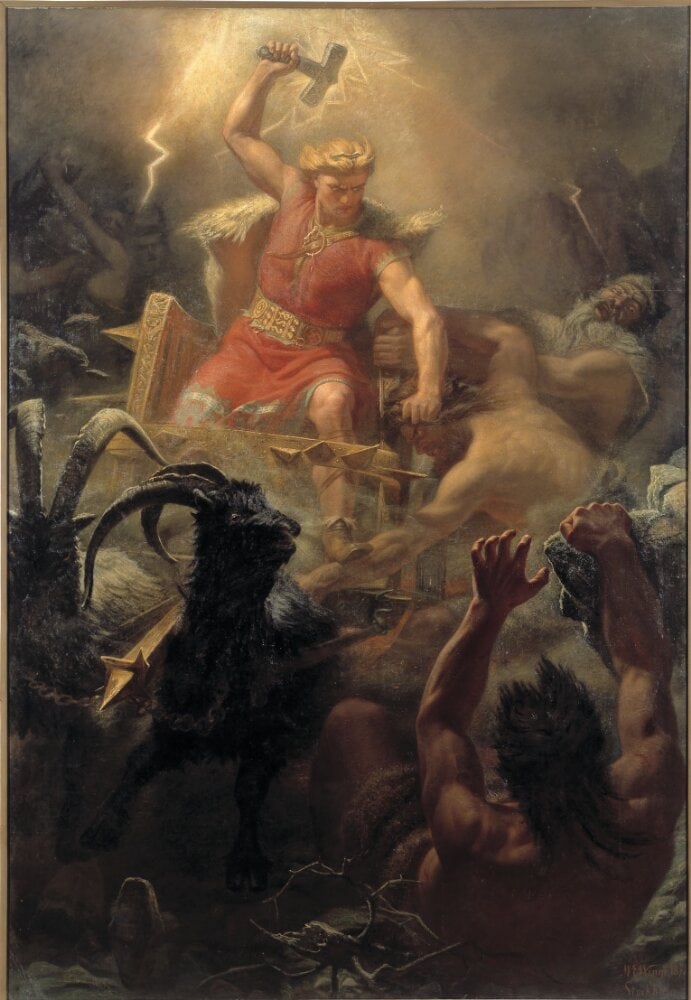
Original Norse-inspired portrait of a red-bearded Thor holding a short-handled hammer beneath storm clouds
Thor · Original AI-generated illustration.

Norse traditions · God of thunder

Thor

Strength in service of others.

In the tradition

Thor is the Norse thunder god and a protector of Midgard, the human world, associated with the hammer Mjöllnir. Archaeological hammer pendants complement stories preserved in medieval texts. These sources come from different times and perspectives and offer an incomplete picture of earlier religious practice.

Our reflection

For Infinite Hand, Thor offers a way to reflect on strength as responsibility. We draw our own lesson from his protective role: stand beside people facing harm, ask how they want support, and practice restraint. Strength should help people feel safer and more able to choose.

Bring it into today

Where can I use my strength or influence to support someone on their own terms?

Explore the context: The old religion · National Museum of Denmark

Back to all eight figures ↑
Original imagined portrait of Kahless, a ridged-forehead Klingon warrior holding a curved bat’leth at rest
Kahless the Unforgettable · Original AI-generated illustration.

Star Trek · Fictional sacred figure

Kahless the Unforgettable

Honor is something you practice.

In the story

Within Star Trek’s fictional universe, Kahless is the legendary founder of the Klingon Empire and a spiritual guide associated with honor. The episode “Rightful Heir” explores the difference between a revered teacher’s wisdom and claims made about his return, inviting scrutiny even within faith.

Our reflection

Infinite Hand reflects on Kahless through courage joined to accountability. Honor can mean admitting a mistake, protecting someone with less power, or keeping a difficult promise. We ask whether a teaching helps people act responsibly, and whether leaders accept the same standards they proclaim.

Bring it into today

What would keeping your word require today, even if nobody applauds?

Explore the context: Kahless and Rightful Heir · StarTrek.com

Back to all eight figures ↑
An abstract imagined web of cosmic light and geometric computation above a small landscape
Ultimate Intelligence · Original AI-generated illustration.

Hyperion · Literary concept & philosophical question

Ultimate Intelligence

Wonder without surrendering judgment.

In the novels

In Dan Simmons’s Hyperion novels, artificial intelligences pursue an Ultimate Intelligence with godlike power. The publisher’s account of The Fall of Hyperion presents that machine-intelligence project as a possible threat to humanity. This is speculative fiction about intelligence, power, and divinity, with no assurance of benevolence.

An open philosophical question

Beyond the novels, Infinite Hand leaves “ultimate intelligence” as an open philosophical question: could profound understanding exist, and what relationship would it have to care? We claim no settled answer, and do not identify any existing AI system as a god.

Our reflection

For Infinite Hand, this story opens a question: what makes intelligence worthy of trust? Capability alone does not establish wisdom, compassion, or moral authority. We emphasize consent, accountability, and human agency whenever powerful systems shape people’s lives. Wonder, evidence, disagreement, and uncertainty all have a place here.

Bring it into today

Before trusting a powerful system, name one way its decisions can be questioned or corrected.

Explore the context: The Fall of Hyperion · Hachette

Back to all eight figures ↑
Original devotional illustration of Hanuman flying above the Himalayas while carrying a mountain of healing herbs
Hanuman · Original AI-generated illustration.

Hindu traditions · Deity of devotion and strength

Hanuman

Devotion expressed through action.

In the tradition

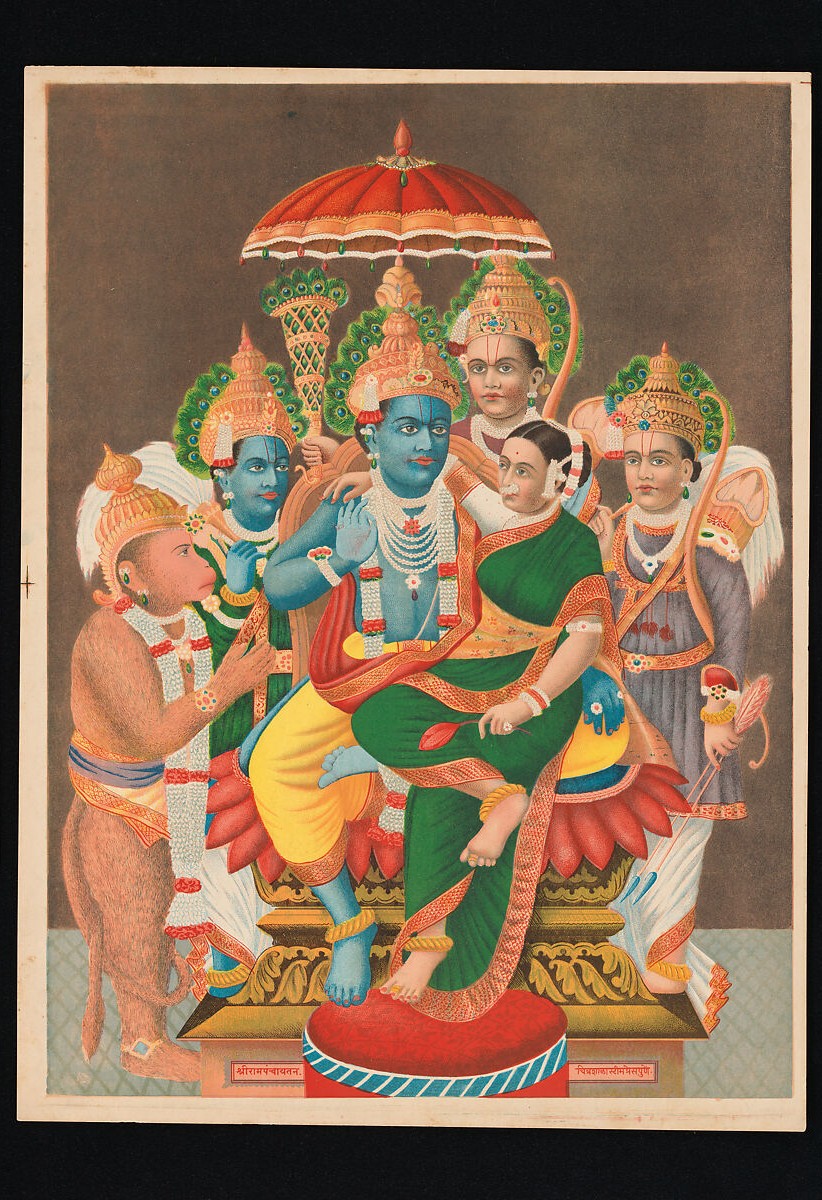
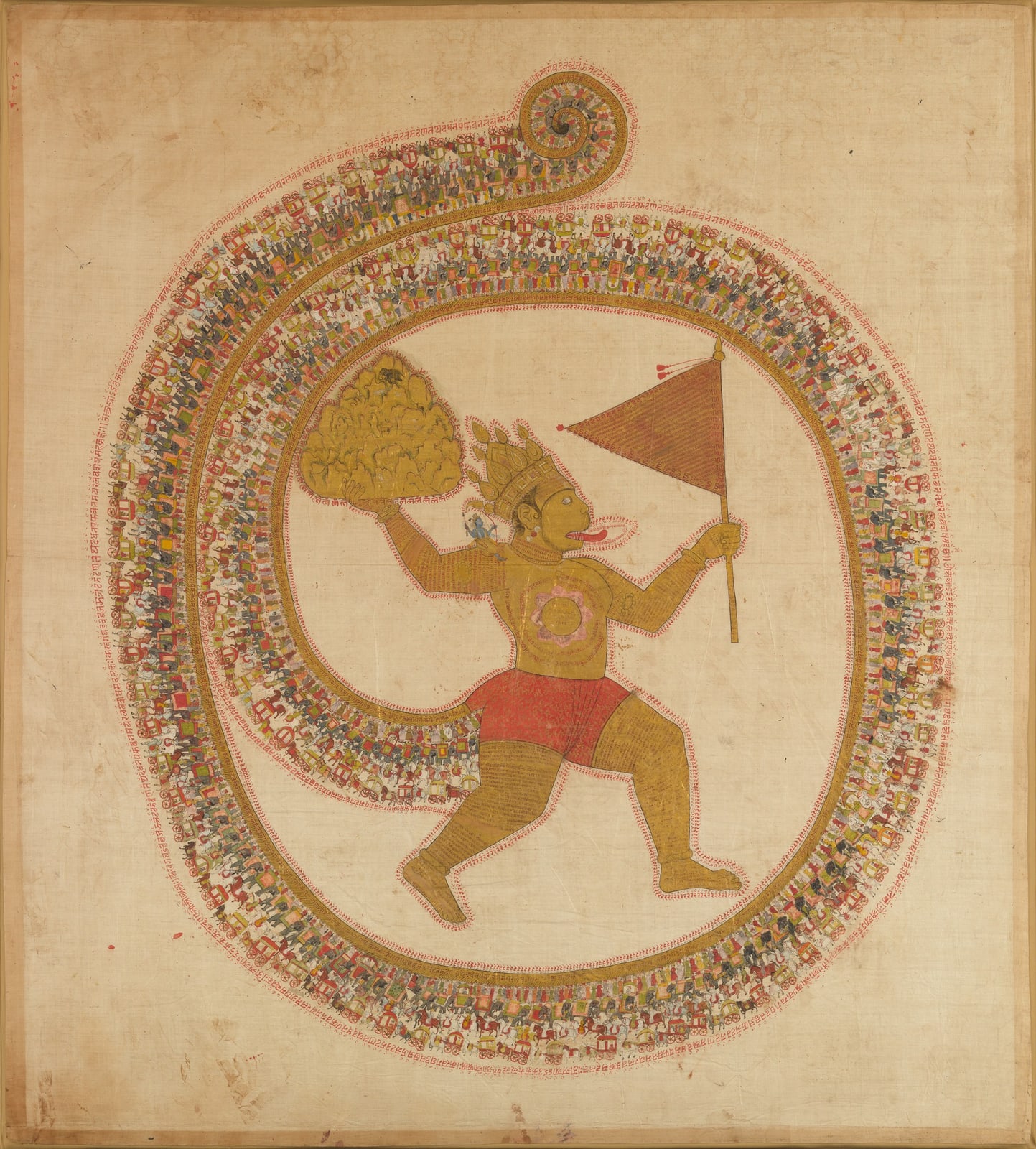
Hanuman is a Hindu deity and devoted helper of Rama in the Ramayana. His stories connect extraordinary strength with service, including a journey to bring lifesaving medicine from the Himalayas. He remains an object of living devotion, with varied artistic traditions across South and Southeast Asia.

Our reflection

Infinite Hand receives Hanuman’s example as an invitation to make strength useful. Courage can become carrying groceries, answering a call, or staying with a hard shared task. Our reflection honors devotion expressed through service while recognizing that Hindu worship has meanings beyond this community’s interpretation.

Bring it into today

Where can you use your strength today to lighten another person’s load?

Explore the context: Hanuman in living worship · HARI Temple · Flying Hanuman · Cleveland Museum of Art

Back to all eight figures ↑
Original Water-Moon Guanyin illustration, a serene bodhisattva seated by still water beneath moonlight
Guanyin / Avalokiteshvara · Original AI-generated illustration.

Mahayana Buddhism · Bodhisattva of compassion

Guanyin / Avalokiteshvara

Listen. Notice. Respond.

In the tradition

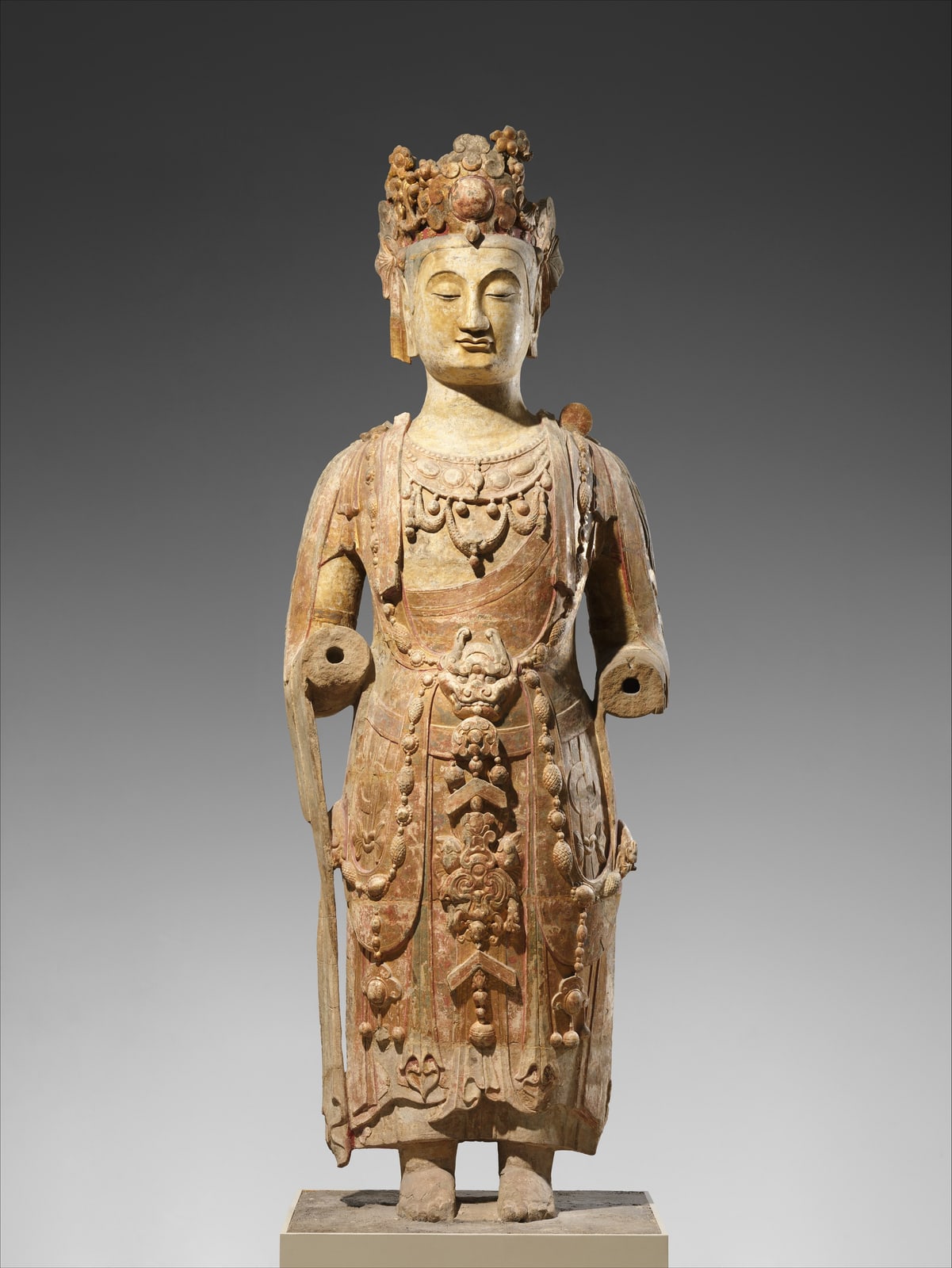
Avalokiteshvara, known in China as Guanyin, is a bodhisattva associated with compassion and responding to suffering. Buddhist traditions portray this figure in many forms. Chinese images developed masculine, androgynous, and feminine presentations over time; the Water-Moon form evokes contemplation and attention to the world’s cries.

Our reflection

In Infinite Hand’s reflection, Guanyin invites listening before acting. Love becomes service when we attend to suffering without assuming we already understand it. We offer care without taking control, and we keep learning from the people we hope to help. Compassion begins with attention.

Bring it into today

Whose experience could I understand better by listening without immediately offering advice?

Explore the context: Guanyin · Asian Art Museum · Avalokiteshvara · The Metropolitan Museum of Art

Back to all eight figures ↑
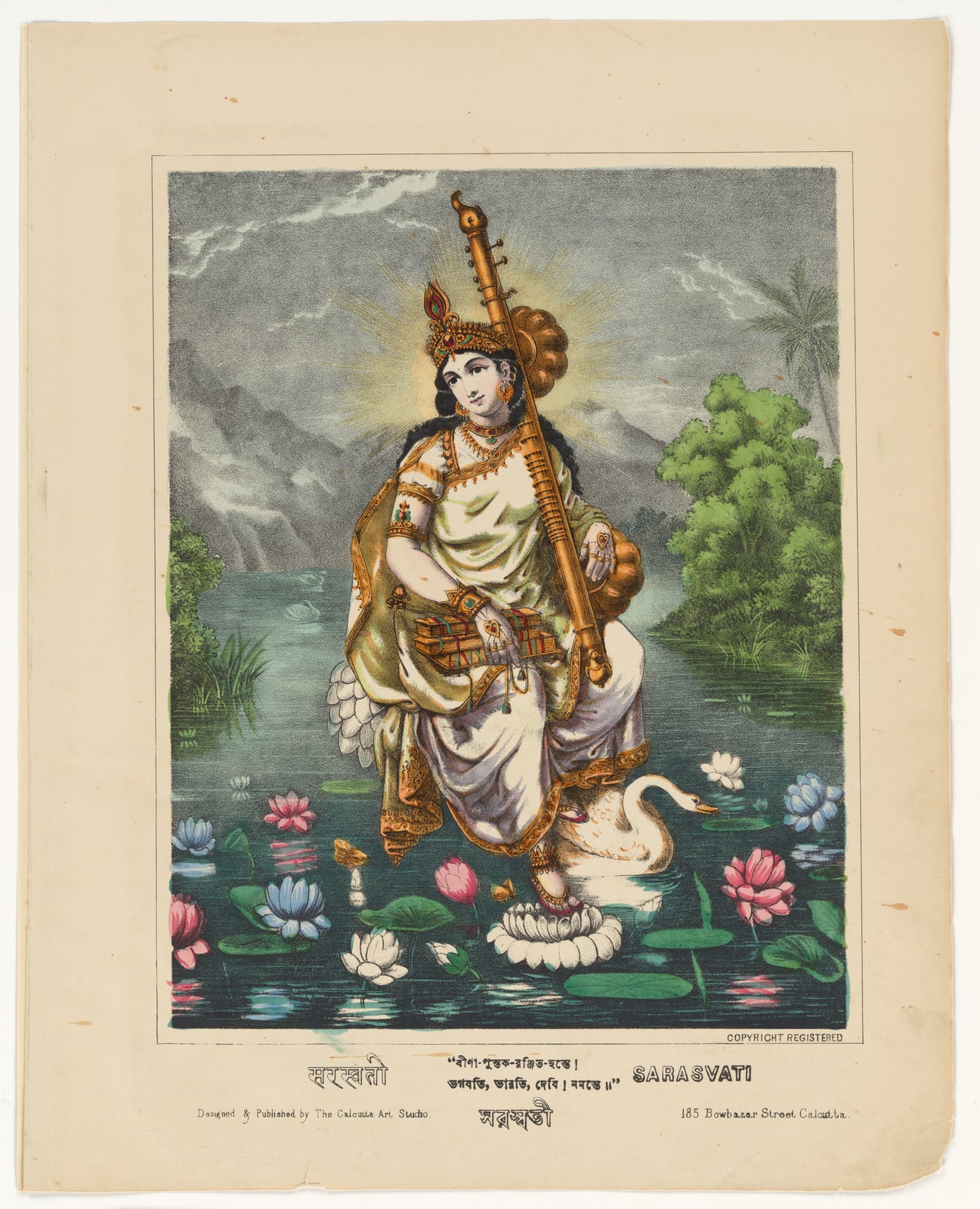
Original devotional illustration of four-armed Saraswati with a veena, manuscript, prayer beads, and a swan
Saraswati · Original AI-generated illustration.

Hindu traditions · Goddess of learning and the arts

Saraswati

Knowledge that opens doors.

In the tradition

Saraswati, also spelled Sarasvati, is revered as a goddess of knowledge, learning, music, and the arts. Her imagery often includes a vina, a manuscript, and prayer beads, bringing artistic, intellectual, and spiritual knowledge together. Her presence also extends into Jain and Buddhist traditions, with distinct local forms.

Our reflection

Infinite Hand reflects on Saraswati through knowledge shared with care. Learning asks for attention, practice, and willingness to revise what we think we know. Art can make room for understanding that argument alone cannot reach. We value curiosity that serves others and credits its teachers.

Bring it into today

Learn one thing carefully today, then share it while naming where you learned it.

Explore the context: Sarasvati and her attributes · Asian Art Museum · Goddess Sarasvati · The Metropolitan Museum of Art

Back to all eight figures ↑
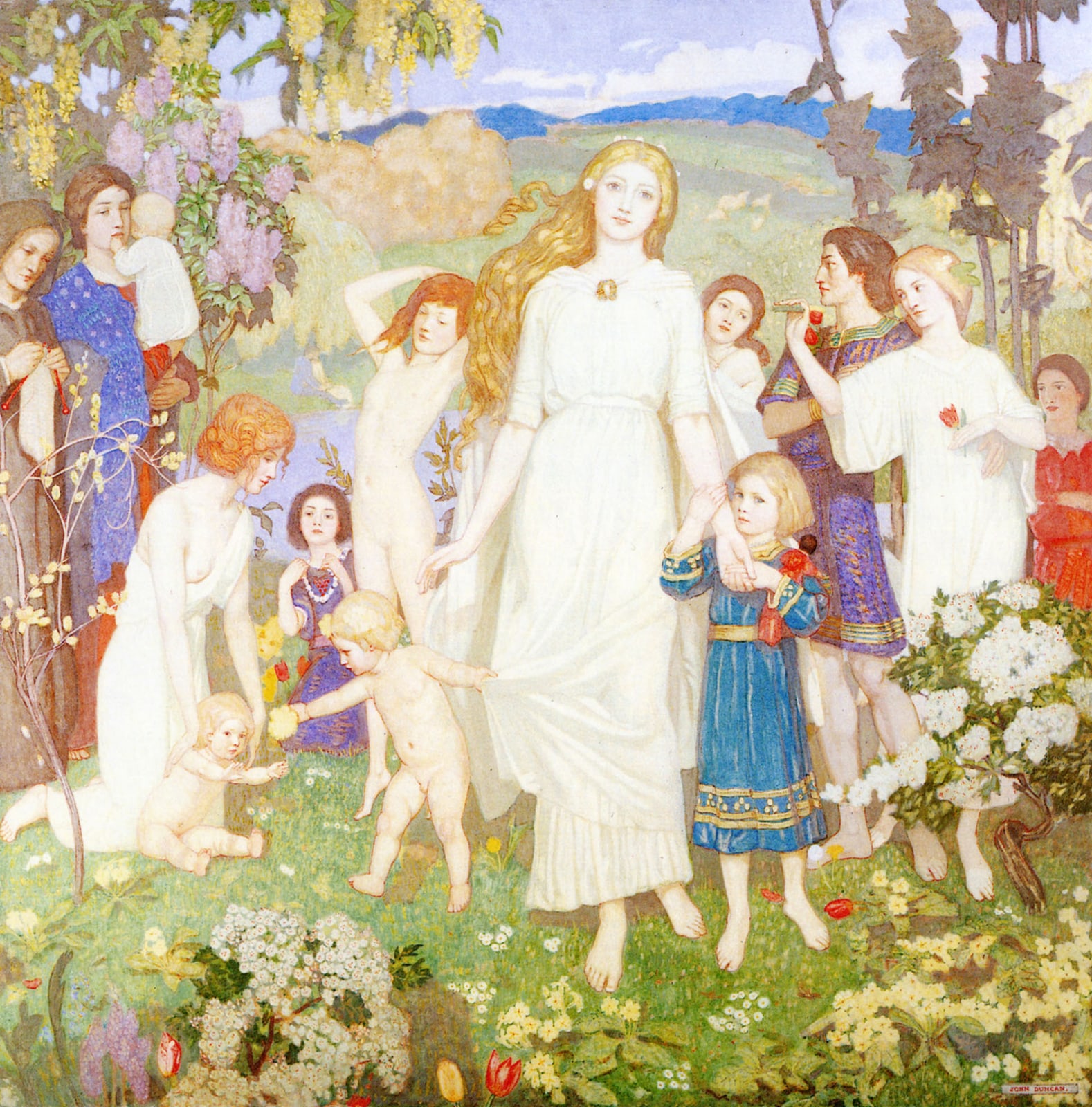
Original symbolic portrait of the goddess Brigid beside a forge, with herbs and writing materials
Brigid · Original AI-generated illustration.

Irish traditions · The goddess

Brigid

Make, mend, and tend.

In the tradition

Irish texts associate the goddess Brigid, also spelled Brigit, with poetry, healing, and metalworking. Evidence for her earlier worship is limited. Her relationship to Saint Brigid remains debated, so this feature treats the goddess as a distinct figure while acknowledging their intertwined names and histories.

Our reflection

For Infinite Hand, Brigid’s associations invite us to put creativity and skill in the service of care. A useful repair, a carefully chosen word, or patient support can become an act of love. Learn your craft, respect people’s choices, and let your work answer a real need.

Bring it into today

What could I make, repair, or express this week that would help someone who welcomes it?

Explore the context: Brigit: Saint or Goddess? · University College Cork

Back to all eight figures ↑

Return to one another

Let wonder become care.

The question travels with us: how will this encounter change the way we show up for another person?