
Compassion begins by hearing.
Guanyin / Avalokiteshvara
Guanyin turns our attention toward the person whose distress we might otherwise hurry past. In Mahayana Buddhist traditions, Avalokiteshvara is a bodhisattva of compassion. We begin our reflection by listening long enough to hear what somebody is asking, before offering the answer we already had ready.
- Listening
- Compassion
- Presence
01 · Context
The many forms of listening compassion.
Avalokiteshvara is known in China as Guanyin, a name associated with hearing the sounds of the world. The Asian Art Museum describes the Water-Moon form contemplating a moon reflected in water, connected with Buddhist reflection on appearances. Devotees seek protection and relief within a religious tradition concerned with liberation from suffering.
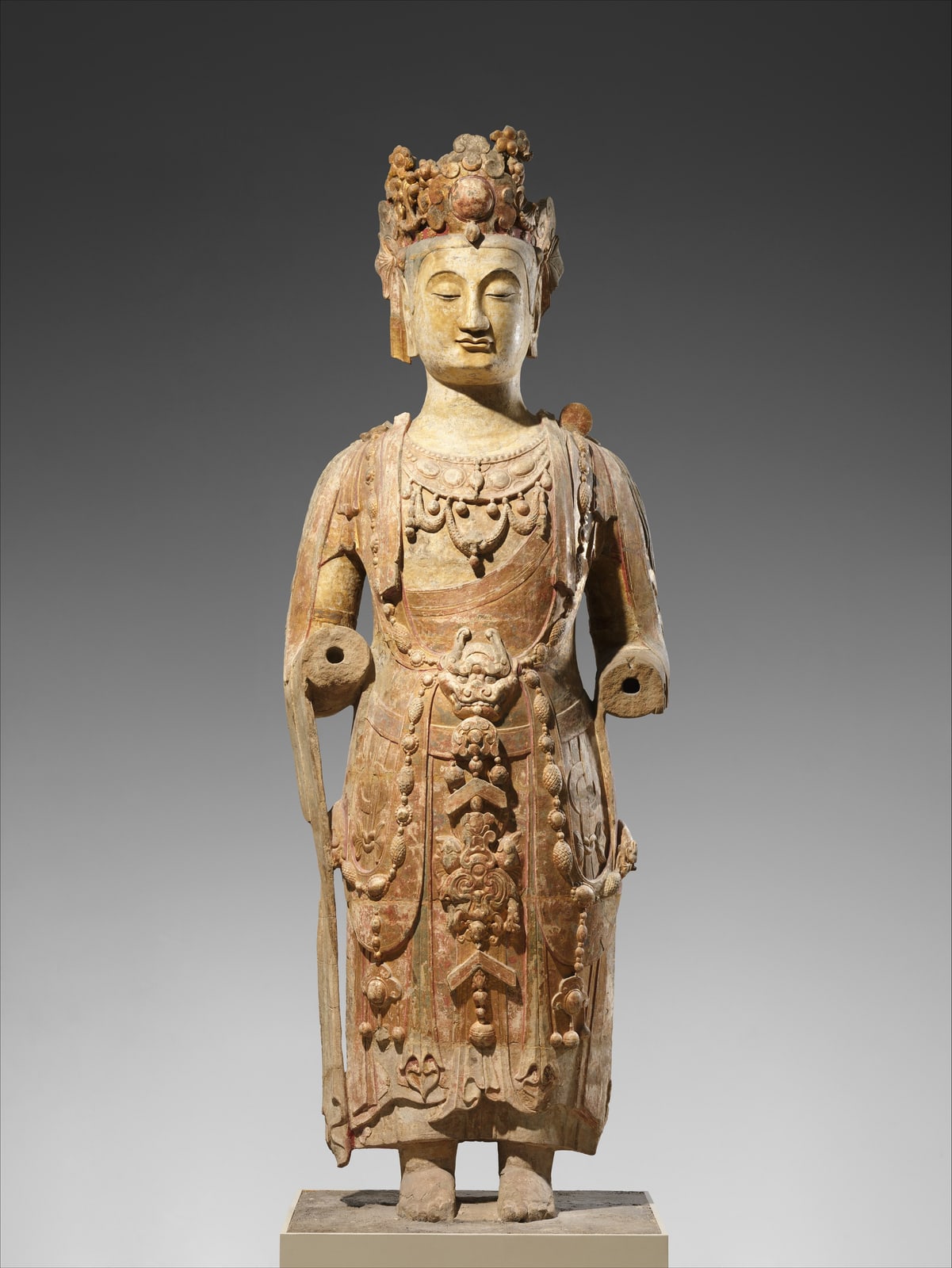
Guanyin’s forms vary across regions and centuries. Chinese images include masculine, androgynous, and feminine presentations, so the description of Guanyin as a goddess covers only part of that history. The Met’s early sculptures show other forms. One is identified as probably Avalokiteshvara; that uncertainty remains part of its record.
Read the sources ↓02 · Infinite Hand’s reflection
What we take from it.
These are Infinite Hand’s interpretations. Bring your own reading to the conversation.
Let the person finish
Ask what they want you to understand. Reflect back what you heard before offering a solution. Shared silence or an honest question may fit better than advice.
Offer choices in how you help
Someone may welcome a meal and decline company. They may want an introduction while keeping their story private. Ask which help they want and adjust when the answer changes.
Remember the rest of their life
Notice the person’s preferences, skills, humor, and relationships while you respond to distress. They remain someone with things to offer, even when they need urgent help.
03 · The difficult part
Compassion needs boundaries and context.
Listening becomes care when it follows the speaker instead of our urge to fix.
Sustained care needs boundaries, shared work, and appropriate expertise. We can offer those practical reflections while continuing to learn from Buddhist communities, whose teachings and practices have their own depth and context.
04 · Bring it into today
Try something from this.
- Give someone a few uninterrupted minutes. Reflect back what you heard before offering a solution.
- Ask whether they want practical help, information, company, or to be heard right now.
- Choose a next step you can sustain. Make clear what you can offer, when, and for how long.
05 · Listening mode
Witness. Clarify. Help.
Decide how to listen before deciding what the other person needs.
Private by design: nothing you write here is sent or stored. Copy it before leaving if you want to keep it.
06 · Look a little closer
Images, history, and credits.
Unknown Chinese sculptor; The Metropolitan Museum of Art · CC0 / public domain
View the collection record ↗Resized for web display; full composition retained.
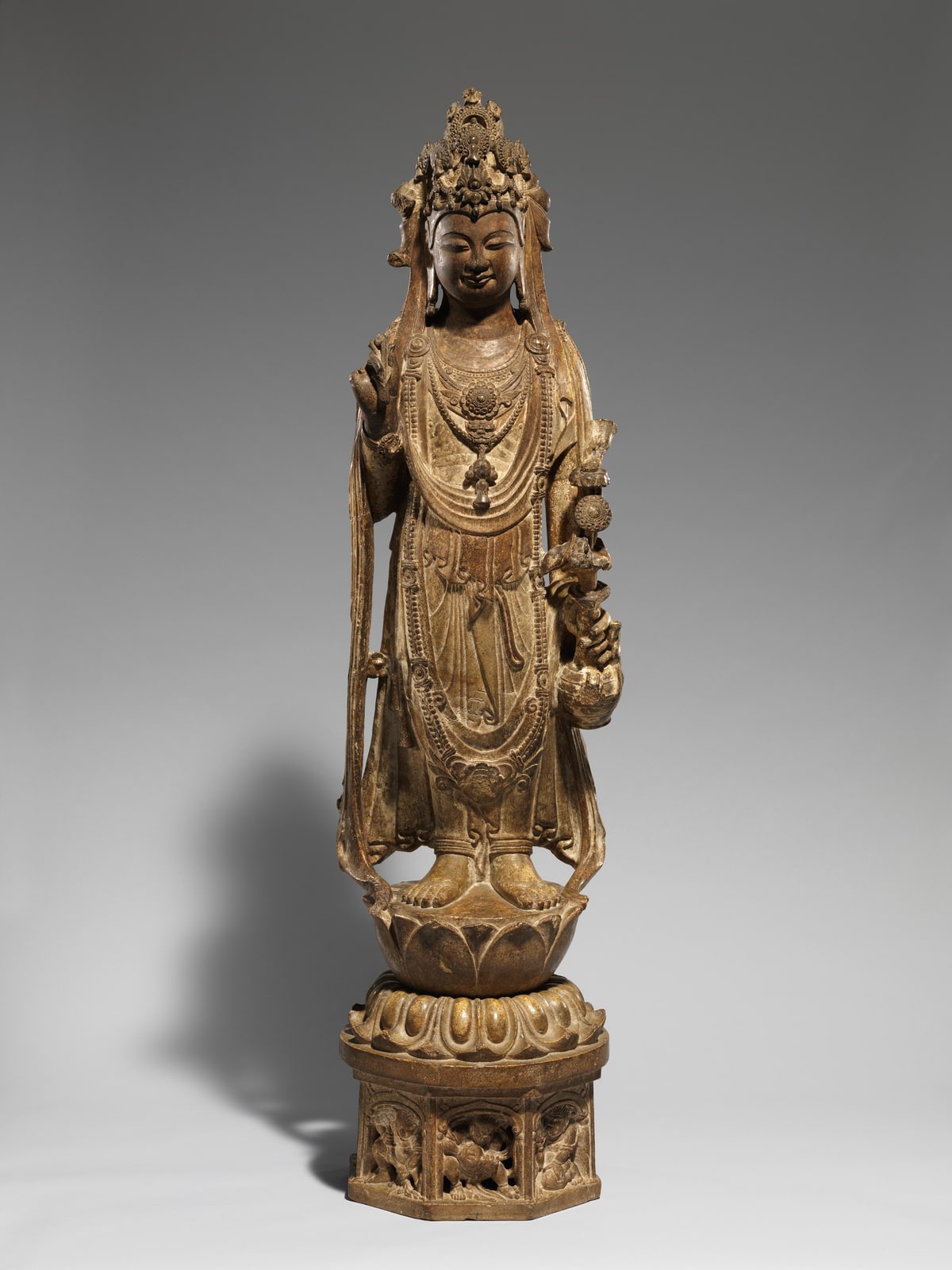
Unknown Chinese sculptor; The Metropolitan Museum of Art · CC0 / public domain
View the collection record ↗Resized for web display; full composition retained.
Sources
Keep reading and watching.
- The bodhisattva Avalokiteshvara: Water-Moon form and gender · Asian Art Museum ↗
- Bodhisattva, probably Avalokiteshvara, ca. 550–560 · The Metropolitan Museum of Art ↗
- Bodhisattva Avalokiteshvara, Sui period · The Metropolitan Museum of Art ↗
Tradition and story are presented in context. The reflections and practices express Infinite Hand’s interpretation.
More people and stories