
Love that becomes a neighbor.
Christ
Jesus stands at the center of Christian faith, in a story of incarnation, crucifixion, and resurrection. At Infinite Hand, we return often to the care he asks people to give one another. Hunger, loneliness, and exclusion call for something we can do with our hands and our time.
- Care
- Hospitality
- Consent
01 · Context
A table, a road, and contested teachings.
Jesus of Nazareth lived and taught in the Jewish world of the first century. In Luke, he reads Isaiah in a synagogue and describes a mission of good news for people in poverty, release from captivity, and freedom from oppression. The Gospel presents this as God’s activity in the world.
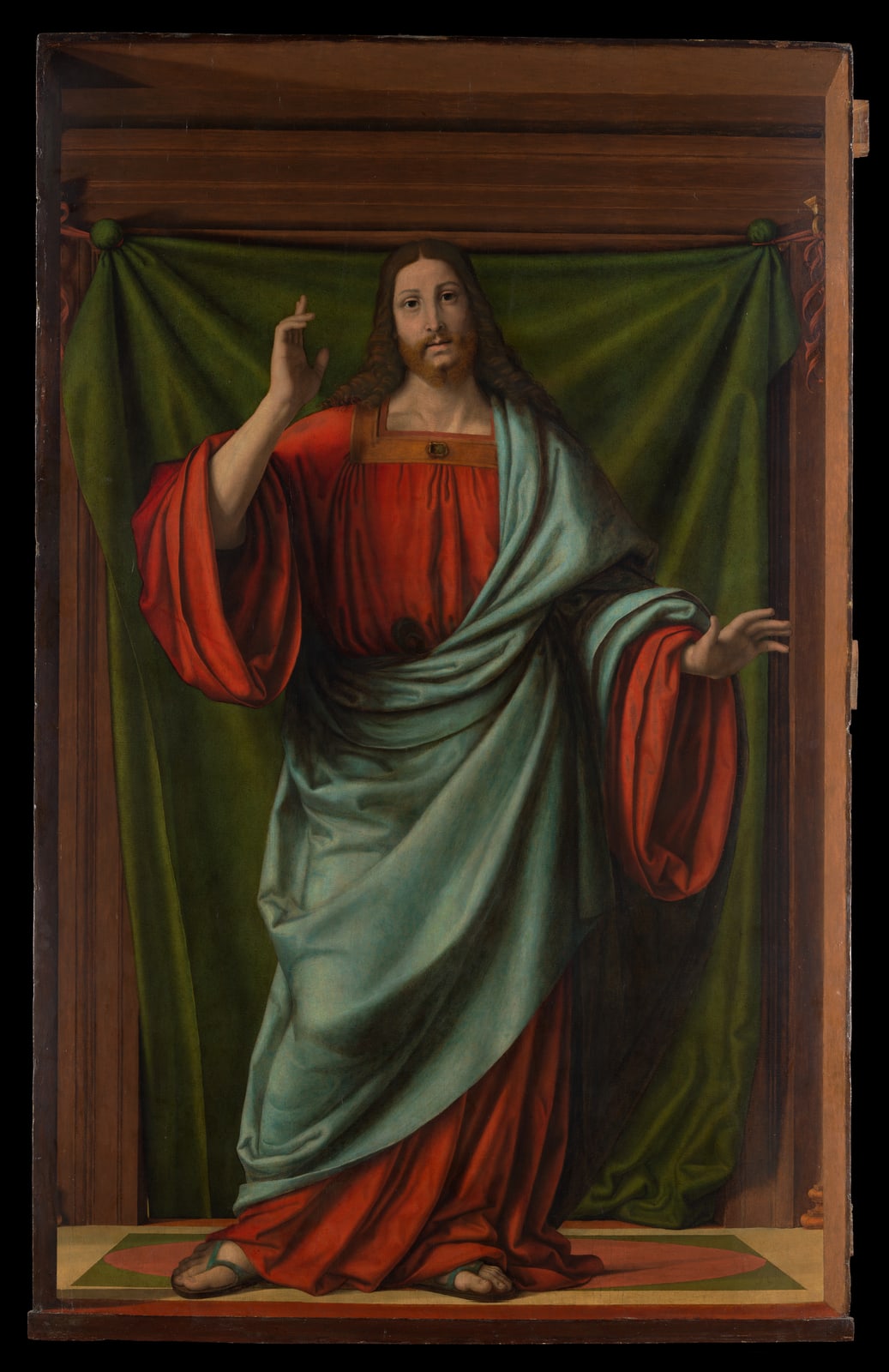
Christian traditions understand Jesus through worship and doctrine as well as ethical teaching. Catholic teaching, for example, confesses him as the incarnate Son of God and risen Lord. The European devotional paintings here were made much later. They show how particular artists imagined Christ; they are not authenticated likenesses of the historical Jesus.
Read the sources ↓02 · Infinite Hand’s reflection
What we take from it.
These are Infinite Hand’s interpretations. Bring your own reading to the conversation.
Ask what would help
A meal, a ride, a coat, or patient company can make a week easier. Ask which of those is welcome. Agree on what you can do and when you will follow through.
Prepare a welcome people can use
Check the entrance, the directions, and the way someone can ask for help privately. Notice who has trouble participating. Change the arrangement where you can.
Keep help open across beliefs
We offer care across religious differences. A neighbor can receive help while keeping their faith, doubts, and privacy. Volunteers can work together without requiring agreement about God.
03 · The difficult part
Care must not become coercion.
Help begins with a person, not a role you have assigned them.
Christ means far more to Christians than one profile about service can hold. Salvation, judgment, sacrifice, and resurrection have different meanings across churches and traditions. Our shared work in neighborly care leaves room for those differences; it does not speak for every believer.
04 · Bring it into today
Try something from this.
- Ask one person what would make this week more manageable. Listen to the answer.
- Choose a task you can complete and agree on when you will return.
- Check that your offer preserves privacy and leaves the person free to decline.
05 · Consent-aware care
Ask. Offer. Leave room.
Plan one act of care that does not require gratitude, belief, or surrendering control.
Private by design: nothing you write here is sent or stored. Copy it before leaving if you want to keep it.
06 · Look a little closer
Images, history, and credits.
Andrea Solario; The Metropolitan Museum of Art · CC0 / public domain
View the collection record ↗Resized for web display; full composition retained.
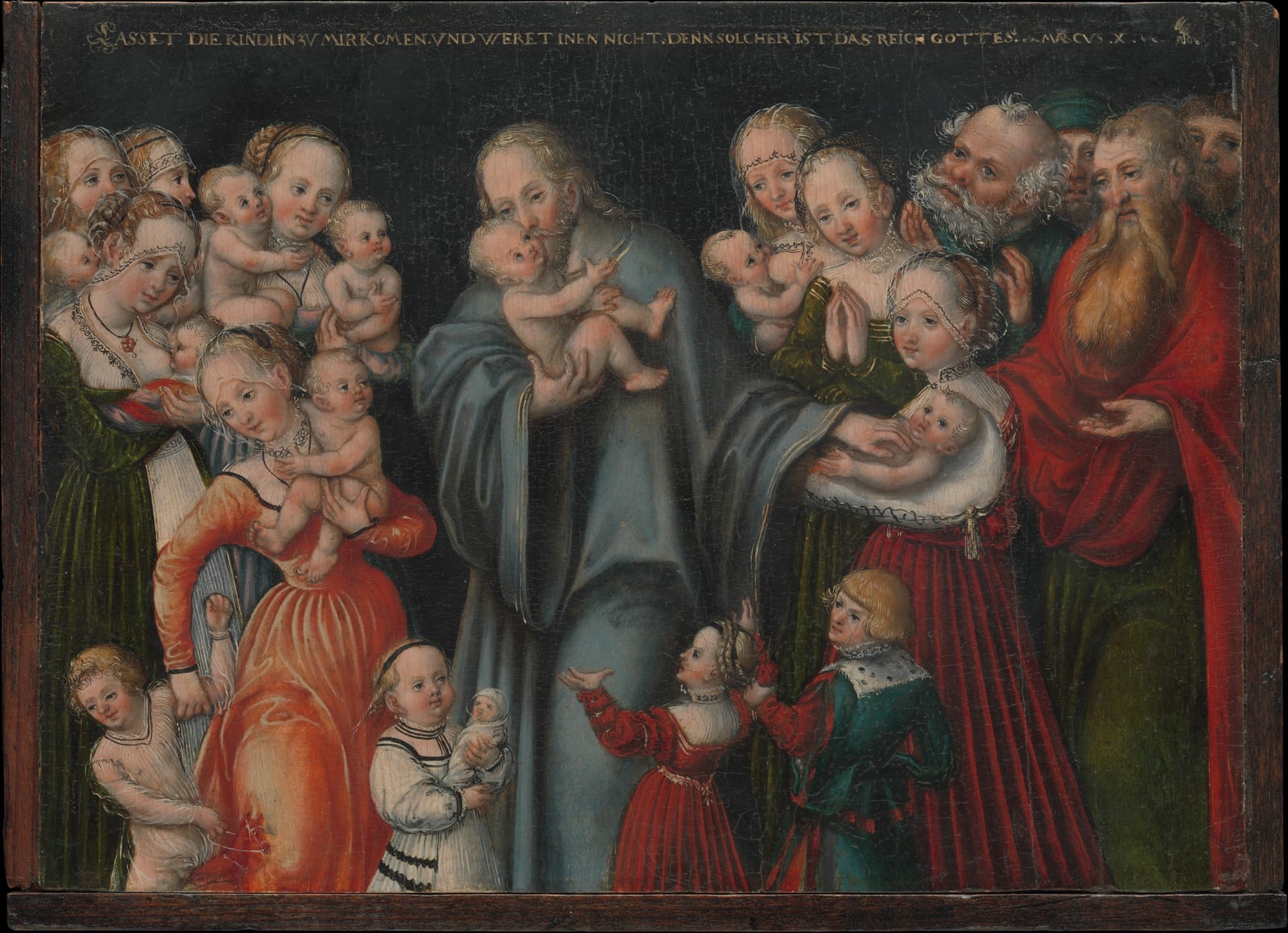
Lucas Cranach the Younger and Workshop; The Metropolitan Museum of Art · CC0 / public domain
View the collection record ↗Resized for web display; full composition retained.
Sources
Keep reading and watching.
- Luke 4: ministry, synagogue, and the announcement at Nazareth · USCCB ↗
- Christian confession of Jesus Christ · Catechism of the Catholic Church ↗
- Andrea Solario, Christ Blessing · The Metropolitan Museum of Art ↗
- Christ Blessing the Children · The Metropolitan Museum of Art ↗
Tradition and story are presented in context. The reflections and practices express Infinite Hand’s interpretation.
More people and stories